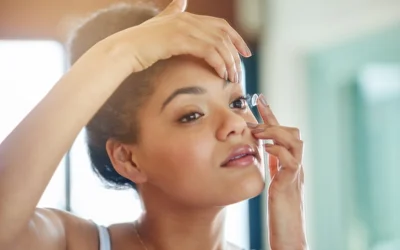
Sleeping in contacts is a common experience. You fall asleep on the couch during one more episode, you doze off with a book, or you crash after a long day and wake up realizing your lenses never came out. If you’ve ever done it, you’re not “bad” at contact lens care. However, it’s one of the fastest ways to turn a minor irritation into a painful, inconvenient problem. A comprehensive eye exam is also a smart reset if you’ve been pushing your lenses a little too far and want to make sure your eyes are still healthy.
Why sleeping in contacts stresses your eyes
Your cornea (the clear front surface of your eye) doesn’t have its own blood supply. It gets oxygen directly from the air. Contacts reduce how much oxygen reaches the cornea, and sleep compounds that by lowering oxygen exposure even more. Add in a closed eyelid environment, and you’ve created a warm, low-oxygen space where irritation and germs can flourish.
You might wake up and feel “fine,” but the effects can build quietly over time.
What can happen if you sleep in contacts
Some issues feel mild at first and then ramp up fast. Others start as subtle changes you might ignore until your eyes force you to pay attention.
Common problems include:
- Dryness and scratchiness that lingers all day
- Redness that keeps returning after lens wear
- Blurred vision that doesn’t clear quickly after waking
- Inflammation
- Corneal abrasions
- Eye infections, including microbial keratitis, which can threaten vision
Signs you should call an eye doctor right away
If you’ve slept in contacts and noticed something unusual, it’s best to seek professional advice. Call and get guidance from an optometrist, especially if symptoms are one-sided (only in one eye) or intensifying.
Watch for:
- Increasing pain or a gritty “something stuck” feeling
- Light sensitivity
- Thick discharge or crusting
- Worsening redness
- Sudden blur or hazy vision
- A white spot on the cornea
If your eye is irritated, don’t put the contact back in to “see better.” Use glasses and bring your contacts with you to your appointment if requested by your doctor.
What about overnight contacts?
There are lenses approved for extended wear, but “approved” doesn’t mean “risk-free.” Sleeping in any contact lens increases infection risk compared to removing them nightly. Your optometrist may recommend extended-wear lenses only for certain patients, and only with specific care routines and follow-up.
If you’ve been regularly nodding off in your lenses, it may be a sign we should adjust something:
- Your lens material or fit
- Your wearing schedule
- Your cleaning system
- Your dryness management plan
- Whether daily disposables would better match your lifestyle
End your day with clearer, calmer eyes
If sleeping in contacts has become a habit or if you’ve had redness, dryness, or a scare that made you rethink your routine, let’s get you checked and comfortable again. Schedule an appointment at Clarin Eye Care Center or Coral Gables Eye Care for a contact lens evaluation and comprehensive eye exam. Our experienced eye doctors in Miami and Coral can help you find a safer setup that fits your real life.